Moissanite vs CZ in a Wheelchair Pendant: Spot the Stone
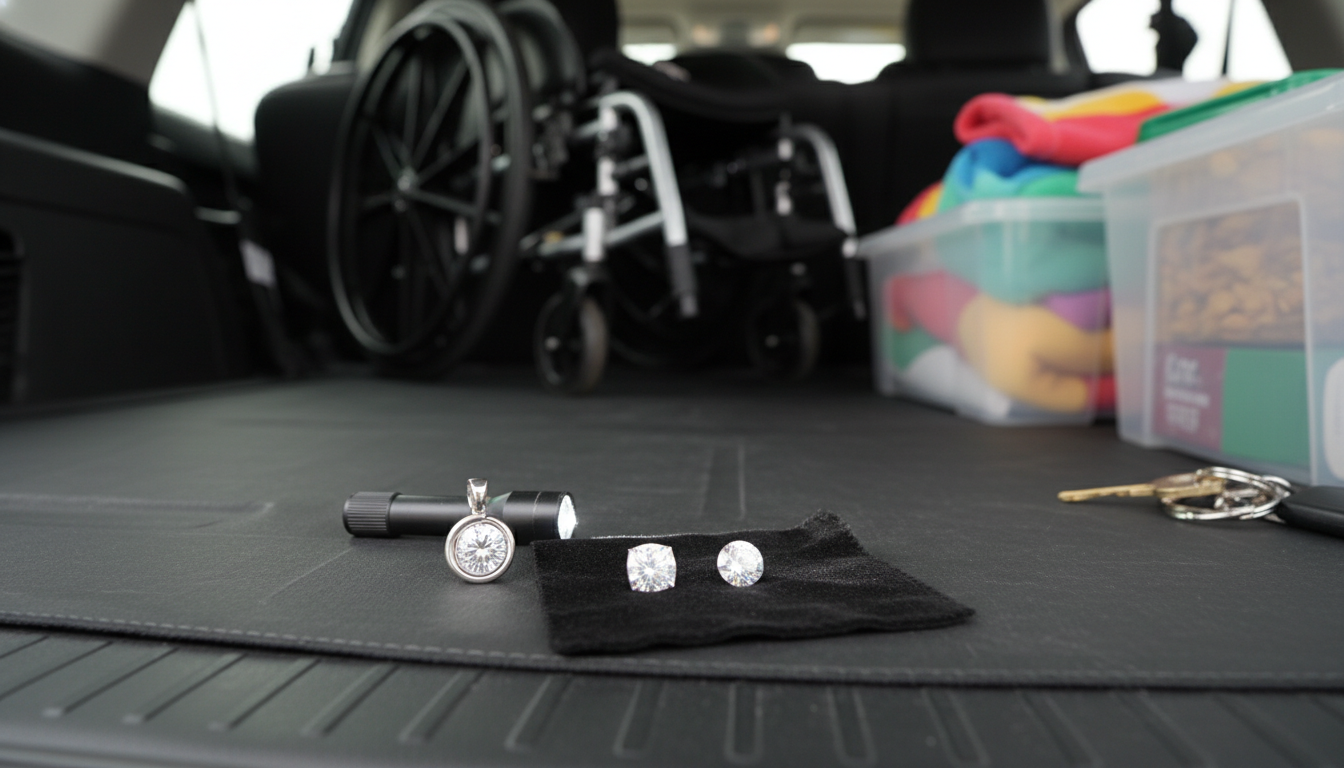
How can you tell if a wheelchair pendant stone is moissanite versus cubic zirconia?
Moissanite and cubic zirconia (CZ) can look similar in a wheelchair pendant, especially under indoor lighting. The most reliable differences come down to sparkle pattern, durability, fog behavior, and how the stone’s edges hold up over time. If you want a deeper breakdown with extra visuals and buying tips, visit the main guide here.
Check the sparkle (fire) and “double refraction” look
Moissanite throws more rainbow flashes (often called “fire”) than CZ and can look more “disco” under spotlights. In some cuts, moissanite may show a faint doubled look to facet lines when viewed closely from certain angles, while CZ tends to look cleaner and more glass-like.
Try the fog test for quick clues
Breathe on the stone like you’re fogging a window. Moissanite typically clears faster because it conducts heat more efficiently, while CZ often stays fogged a bit longer. This isn’t perfect, but it’s a fast at-home check.
Look at wear: chips, scratches, and cloudy buildup
If the pendant has been worn often, CZ is more likely to show surface scratches, slightly rounded facet edges, or a cloudy/“sleepy” appearance from abrasion and residue. Moissanite is much harder and usually keeps crisp facet edges and better long-term brilliance with normal wear.
Use a tester (and know what it can’t do)
A basic diamond tester often reads moissanite as “diamond-like” and usually won’t react the same way to CZ. For higher confidence, a jeweler can confirm with a moissanite-capable tester and a loupe inspection—especially helpful if the stone is small or set deep in the wheelchair pendant.
Compare price and sourcing details
All else equal (size, cut, setting), moissanite costs more than CZ. If the pendant is priced extremely low for a large, very “diamondy” center stone, it’s more likely to be CZ unless the listing clearly states moissanite and provides specs.
FAQ
Does moissanite hold up better than cubic zirconia for everyday pendant wear?
Yes. Moissanite is significantly harder and more scratch-resistant, so it tends to stay clearer and keep sharper facets longer than CZ with regular wear.







Leave a comment