Balance a Figurine Sculpture: Best Spots & Styling Tips
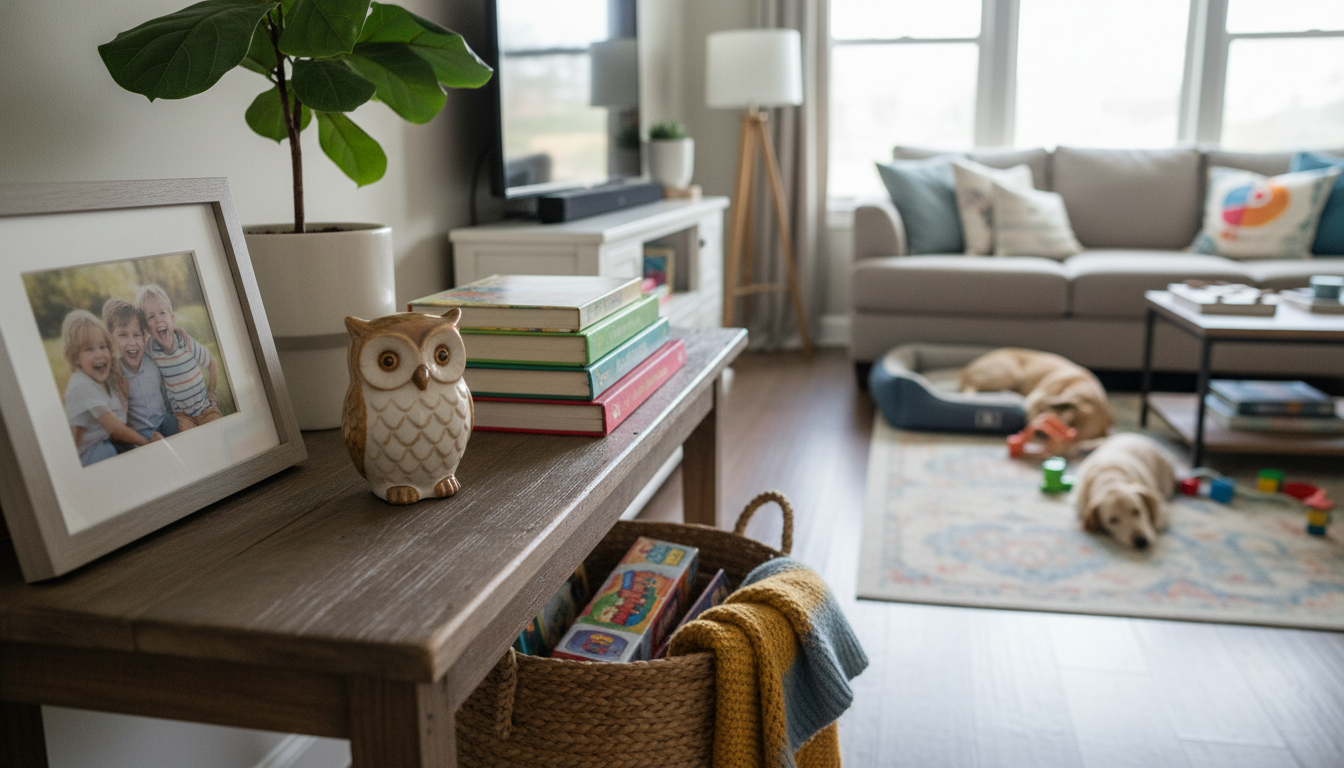
Where should I place a figurine sculpture so it feels balanced in the room?
Answer
A figurine sculpture feels most balanced when it has a “visual partner” nearby—either another object, a strong background element, or enough breathing room to read as intentional. Start by choosing a spot where people naturally pause, like a console table, bookshelf section, mantel, or coffee table, then use scale and spacing to keep it from feeling lost or crowded.
On a flat surface, place the figurine slightly off-center rather than dead middle. Pair it with one or two supporting pieces that contrast in height and shape (a low stack of books, a small tray, or a slim vase). Keep the supporting items simpler than the sculpture so the figurine remains the focal point, and leave a few inches of open space around it to avoid a cluttered look.
On shelves, aim for a triangle arrangement: the figurine can be the “peak” with shorter items stepping down on either side. If the shelf is long, place the figurine near one-third of the span and balance it with a grouping on the opposite side. On a mantel, avoid lining everything up; instead, anchor one side with a taller object (like a candlestick or framed art) and let the figurine sit nearby as a refined accent.
In the room as a whole, think about sightlines. If the figurine is detailed, place it at about eye level where it can be appreciated without bending or craning. If it’s glossy or metallic, check it under your usual lighting to prevent harsh glare; soft side lighting often makes sculptural details stand out and helps the piece feel integrated rather than “dropped” into the space.
For more placement ideas and styling examples, visit the main article.
FAQ
How do I choose the right size base or stand for a figurine sculpture?
Pick a base that’s slightly wider than the figurine’s footprint so it feels stable, but not so large that it becomes the main visual element. A good rule is to keep the base subtle in color and finish so the sculpture remains the focus.







Leave a comment