Lift-Top Coffee Table Raised Top Weight Limit (20–50 lbs)
How much weight can a lift-top coffee table typically hold on the raised top?
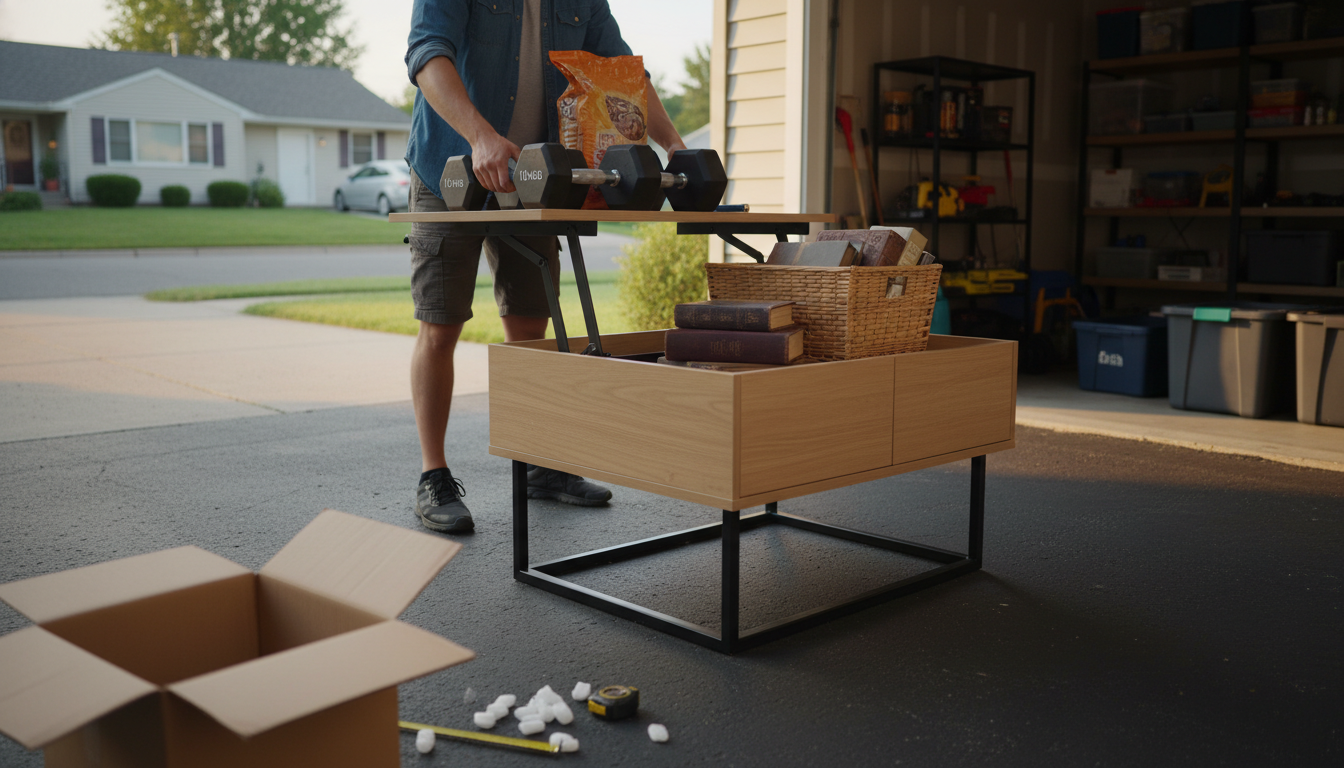
A lift-top coffee table’s raised surface is designed for light-to-moderate, “daily use” loads rather than heavy furniture-duty weight. Most well-built lift-top mechanisms and tabletop panels typically handle around 20 to 50 pounds on the raised top, depending on the hardware, the thickness of the top, and how the lift arms distribute the load.
What affects the real-world weight limit?
Even when two tables look similar, their raised-top capacity can vary a lot. The biggest factors are the quality of the lift mechanism (steel gauge, pivot design, and mounting plates), the tabletop material (solid wood, MDF, particleboard, veneers), and how securely the top is fastened to the lifting arms.
Another major factor is how the weight is placed. A centered load (like a laptop and a dinner plate) is easier on the lift arms than the same weight perched on the far edge. Off-center weight increases leverage and can cause wobble, sagging, or premature wear.
What can you safely put on a raised lift-top?
In most homes, the raised top works well for meals, a laptop setup, books, or board games. As a rule of thumb, if the top starts to feel springy, the mechanism squeaks, or the table becomes noticeably unstable, the load is too high or too far forward.
How to avoid overloading the mechanism
- Keep heavier items low (inside the storage compartment or on the base shelf, if your table has one).
- Distribute weight across the surface instead of stacking in one spot.
- Avoid leaning or sitting on the raised top—this introduces sudden force and torque.
- Check and tighten hardware occasionally; loose screws reduce capacity and stability.
For a closer look at lift-top design details, storage space, and everyday usability, see the full guide here: 48-inch antique white lift-top coffee table with hidden storage.
FAQ
Can you sit on a lift-top coffee table?
It’s not recommended, especially when the top is raised. Sitting adds concentrated, shifting force that can bend the lift arms, loosen mounting points, or tip the top unexpectedly.








Leave a comment